Serving Athens and Surrounding East Texas
Asphalt Paving in Athens, TX
Planning a driveway, parking lot or repair? Tell us about the property. Get a Free Estimate
DRIVEWAYS · PARKING LOTS · RURAL ROADS
Connect With an Asphalt Paving Company in Athens, TX
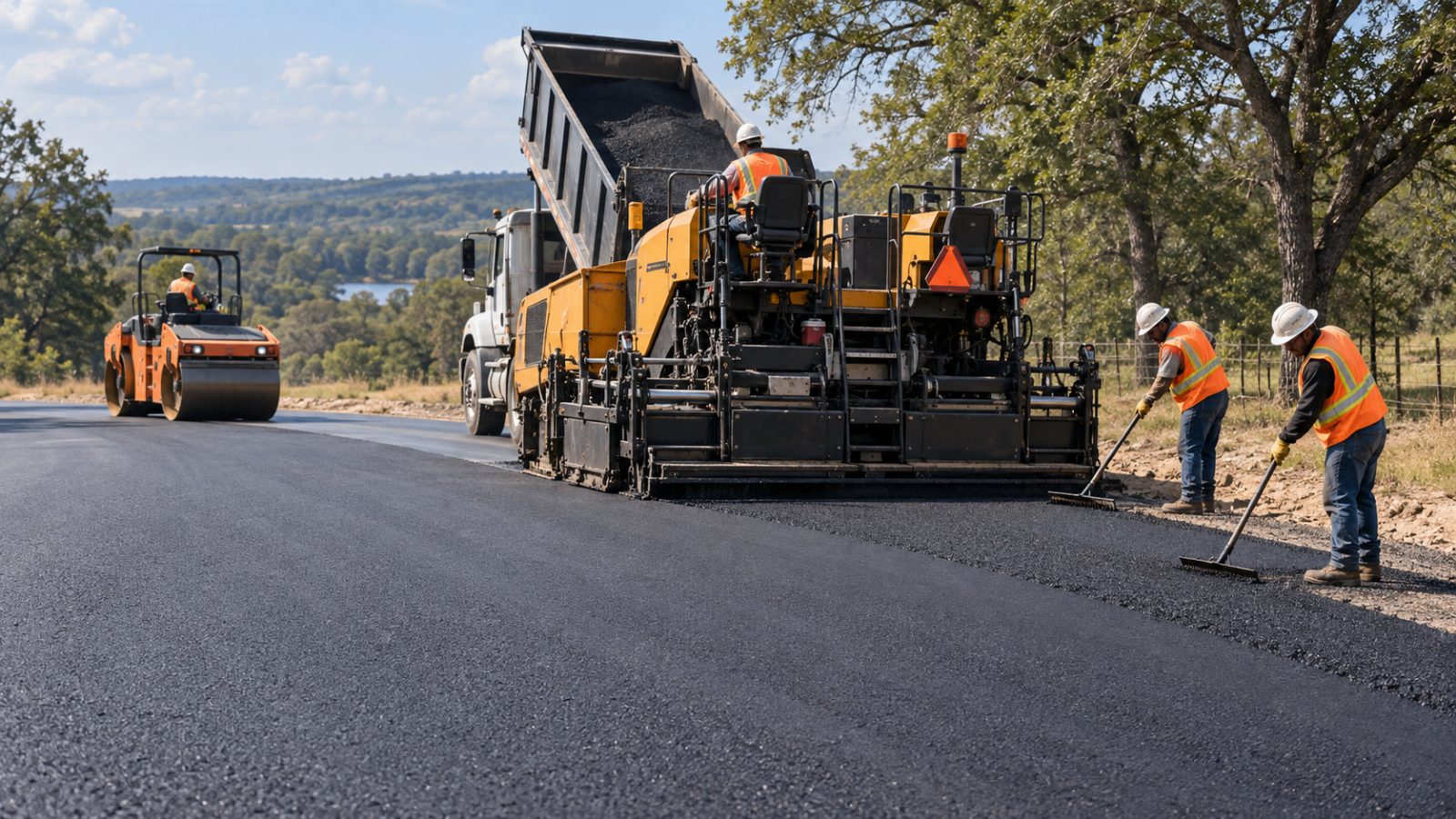
Looking for an asphalt paving company in Athens, TX? Athens Asphalt Paving is a free referral service: send one request and we connect you with an independent local paving contractor who inspects the property, explains the options and quotes the work. Explore asphalt paving, resurfacing and site preparation for homes, businesses and rural properties across Athens and the surrounding East Texas communities.
- Preparation that starts with the base and drainage
- Options for your property's use and budget
- One request to reach a local contractor
Asphalt Driveway Paving
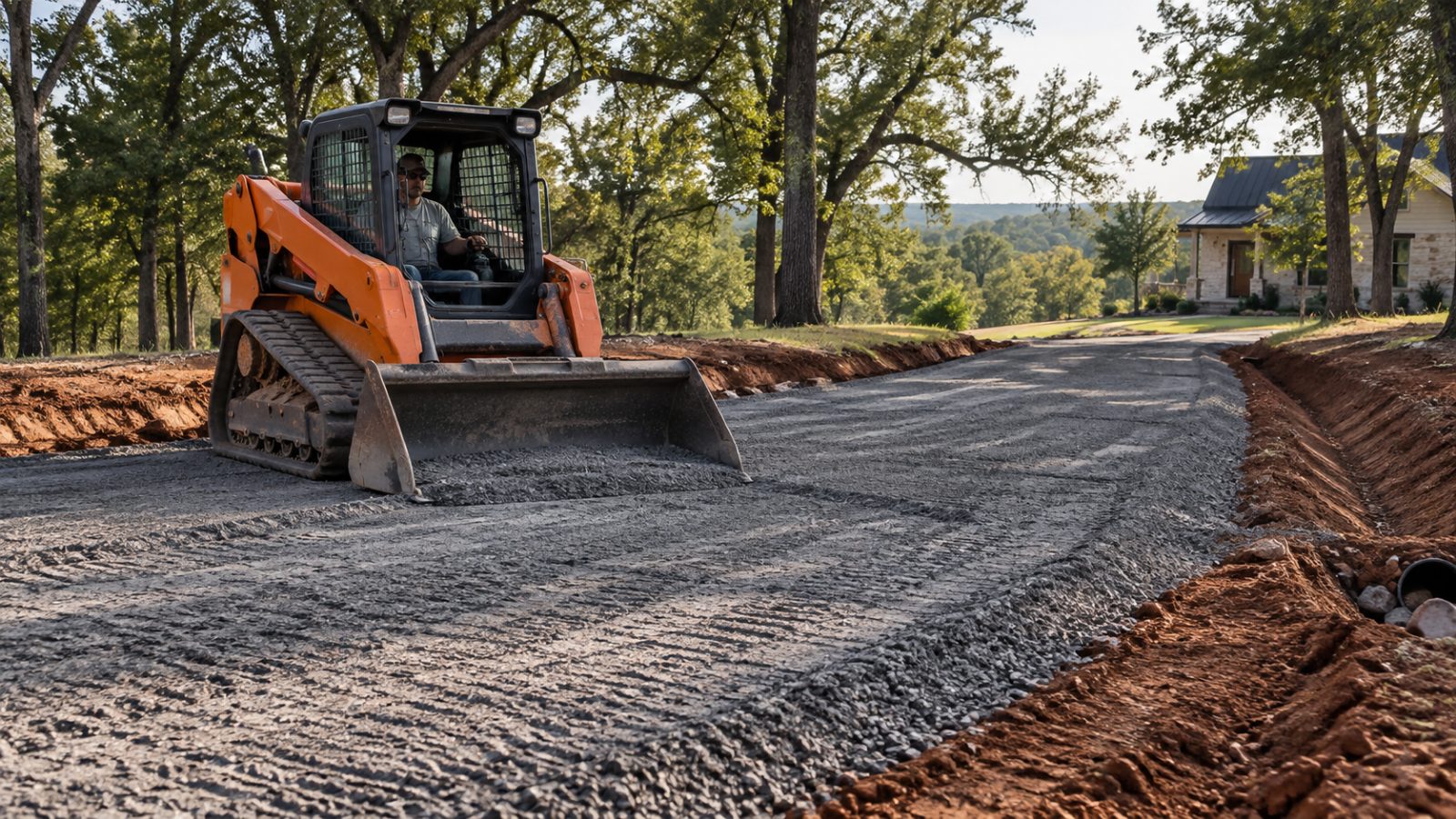
Asphalt driveway paving gives homes, acreage and lake properties a new paved drive planned around the ground beneath it. Soil, base depth, drainage, slope, width, the vehicles that use it and the connection to the road all shape the work, not just the finished surface.
Before paving, the contractor should check whether the ground or gravel base needs to be built up, compacted or replaced, where rain runs off the drive, and how width, entrances and the tie-in to the road affect the plan. Existing asphalt should be assessed for cracking, settlement and drainage before choosing replacement or resurfacing.
Read more about asphalt driveway paving in Athens.
Commercial Asphalt Paving
Commercial asphalt paving covers parking lots, drive lanes and access areas for businesses, churches, schools, property managers and developers. The work is planned around how the property operates, including customer parking, deliveries, drainage and accessible spaces, so the business is not closed longer than necessary.
Layout, striping plan, traffic flow and accessible spaces shape a parking area. Entrances and delivery routes need to handle turning trucks without breaking up at the edges, older pavement may need patching, milling, resurfacing or full reconstruction, and grade and drainage are reviewed before paving so water leaves the surface.
See the full page on commercial asphalt paving and parking lots.
Asphalt Repair and Resurfacing
Asphalt repair and resurfacing fixes potholes, cracks, worn surfaces and low spots on driveways, parking lots and access roads without tearing everything out. When the base is sound, a targeted repair or a new overlay can add years of service; when it has failed, reconstruction makes more sense.
Potholes are cut out, the base is addressed where needed and the area is patched with new hot-mix asphalt. Hairline, linear and alligator cracking each point to a different problem. Faded, raveling asphalt over a solid base can be resurfaced, while sinking areas and crumbling edges usually need excavation and rebuilding.
Learn more about asphalt repair and resurfacing.
Sealcoating and Crack Filling
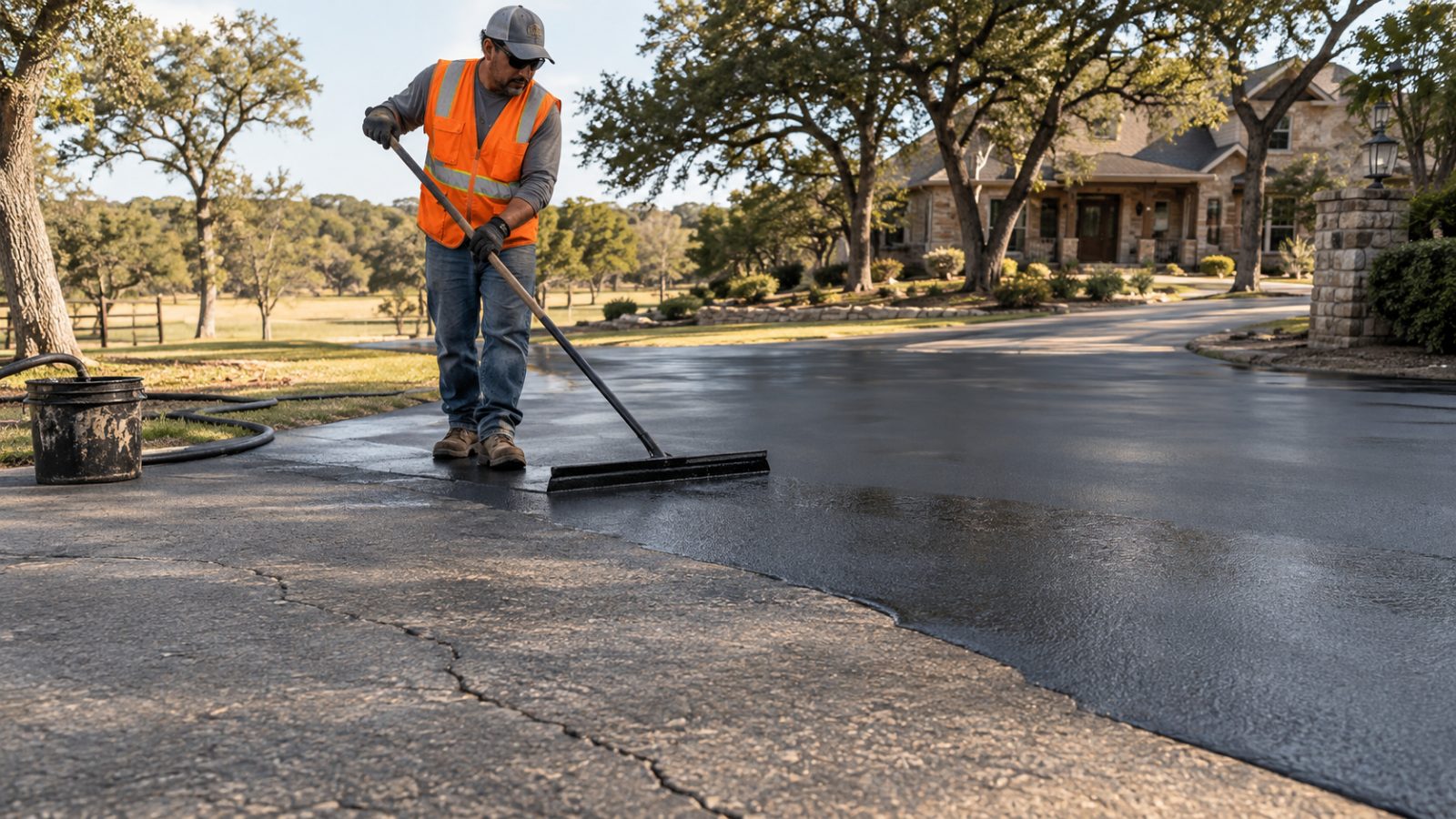
Sealcoating and crack filling are maintenance for asphalt that is still in good shape. Crack filling keeps water out of the base, and sealcoating shields the surface from sun, water and oil. They slow East Texas weathering but are not a fix for pavement that has already failed.
Cracks are cleaned and filled with a flexible hot-applied sealant. Before any sealcoat goes down, debris is cleared, oil spots are treated and suitable cracks are addressed so the sealer bonds. A contractor can also suggest a simple maintenance schedule based on how the pavement is used.
Ask the contractor whether your asphalt is a good candidate or needs repair first. Read more about sealcoating and crack filling.
Recycled Asphalt and Millings
Recycled asphalt millings are ground-up old pavement that, once graded and compacted, bind into a firm surface that sheds water and throws far less dust than gravel. They suit long rural driveways, ranch roads, equipment yards and overflow parking where full paving is hard to justify.
They are not a substitute for a paved driveway. The finish is coarser, the edges need containment and the surface keeps tightening over its first season, so the intended use, traffic and site should be discussed before choosing millings or conventional asphalt.
See when they make sense on our recycled asphalt and millings page.
Grading and Site Preparation
Grading and site preparation shapes, drains, builds up and compacts the ground before paving. If the ground under the asphalt is soft, poorly graded or holds water, the pavement will crack and sink however well it was laid, so preparation is the foundation of the project.
The work can include grading to the elevations the finished surface needs, planning ditches, swales, crowns and culvert areas around how water moves during heavy rain, building up and compacting the base, and removing or reworking old gravel, failed asphalt and soft soil.
Learn more about grading and site preparation for paving.
Asphalt Paving Cost in Athens
There is no single price for asphalt paving in Athens. Project size, pavement thickness, base and grading work, drainage, access and the condition of any existing pavement all affect the cost, so an independent contractor reviews the property and gives you a free estimate.
The table lists what shapes the price of each service. It is not a quote; the contractor's estimate explains what is included.
| Service | What influences the price | Price |
|---|---|---|
| Asphalt driveway paving | Driveway size, excavation, base preparation, drainage, access, materials and site conditions | Free on-site estimate |
| Commercial asphalt paving | Square footage, pavement thickness, base work, grading, drainage, access and traffic requirements | Free on-site estimate |
| Asphalt repair and resurfacing | Damaged area, pavement condition, preparation, drainage, access and project size | Free on-site estimate |
| Sealcoating and crack filling | Pavement condition, preparation, square footage, crack severity and access | Free on-site estimate |
| Recycled asphalt and millings | Material quantity, haul distance, grading, drainage, compaction and site access | Free on-site estimate |
| Grading and site preparation | Acreage, material movement, drainage, grade changes, excavation and hauling | Free on-site estimate |
Inside Athens city limits, new construction and most site work need a permit; see the City of Athens building permits page before work begins.
How a Paving Project Works
A paving referral follows four steps, from your first request to the contractor's finished surface. What changes is the property, the preparation it needs and how the pavement will be used.
1. Discuss the project
You tell us how the area is used, what you want to change and what condition the existing surface is in.
2. Review the site
An independent contractor looks at access, grade, drainage, existing pavement and the preparation the ground needs.
3. Define the work
The contractor explains the proposed scope, the materials and the factors that can affect cost and timing.
4. Complete the project
If you hire the contractor, they prepare the site, compact the base and place the surface under their own agreement with you.
Where We Connect You
We connect property owners in Athens and throughout East Texas and surrounding areas with local contractors. Communities covered include Tyler, Palestine, Frankston, Jacksonville, Seven Points, Gun Barrel City, Brownsboro, Mineola, Canton, Corsicana, Mexia, Kaufman, Murchison, Malakoff, Chandler, Eustace and Fairfield.
Every property is different, so access, existing pavement, drainage, traffic, grade and the intended use of the surface all shape a contractor's recommendation. If your town is not listed, contact us and ask whether a contractor covers your property.
See all service areas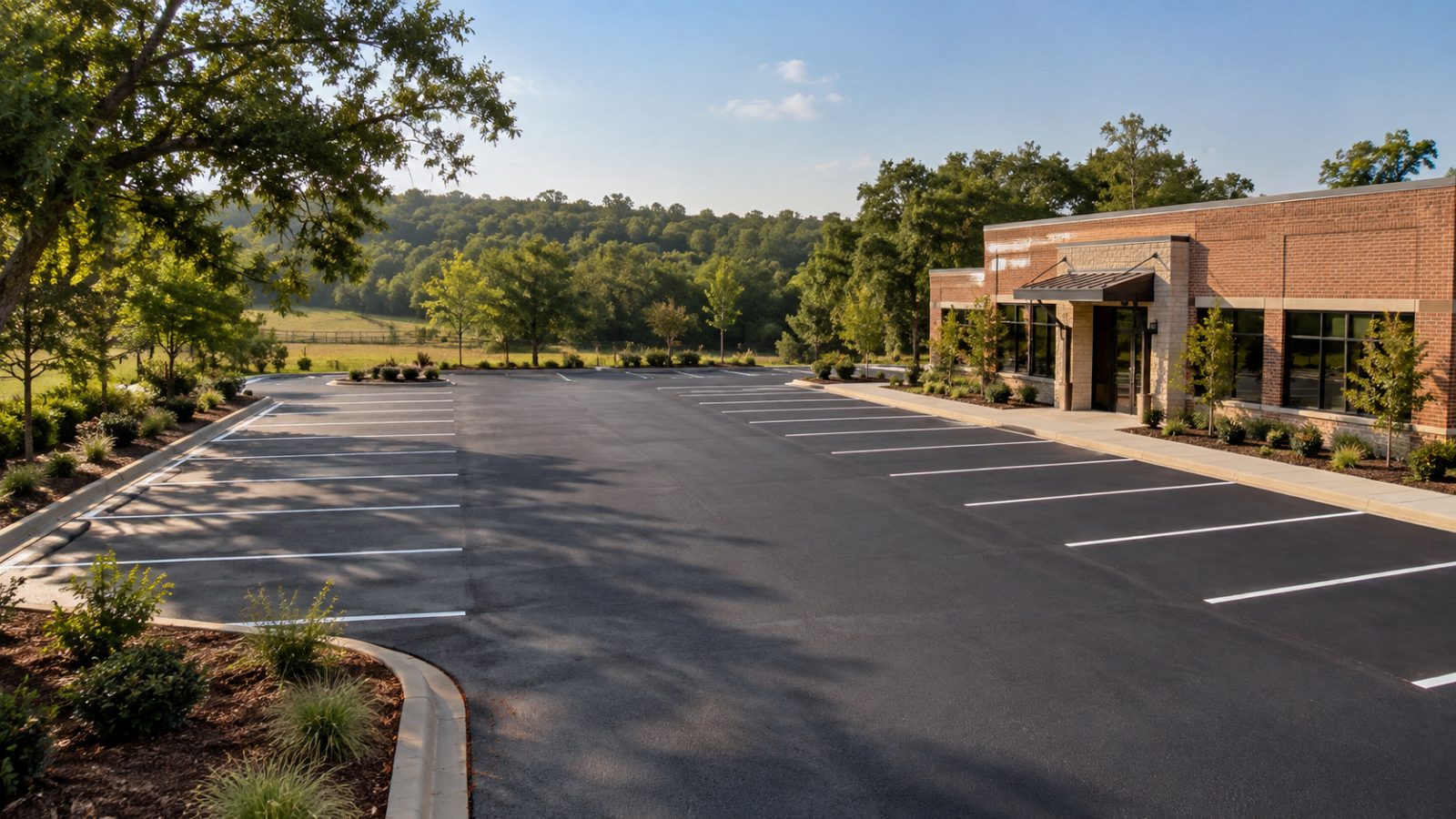
Why Choose Athens Asphalt Paving?
We are a free referral service: one request connects you with an independent local paving contractor. Our pages explain how East Texas soils, rain and heat affect asphalt and why base and drainage come first. We do not do the paving ourselves.
Local knowledge
Sandy soils, expansive clay, heavy spring rain and summer heat all affect asphalt. We connect you with contractors who work in East Texas and can assess the conditions on your property.
Straightforward communication
Our pages explain in plain language what preparation is needed, what the paving involves, what maintenance to expect and which factors drive the cost.
Preparation first
Ask the contractor about the base, grading, drainage and existing surface, because asphalt performs only as well as what is underneath it.
One local point of contact
One request or email to us, and we pass your request to a local contractor. You are told who they are before any visit.
What People Ask Us
Straight answers to the questions Athens and East Texas property owners ask most often about paving timelines, resurfacing, rural drives, millings and getting an estimate.
How long does asphalt paving take?
It depends on the size of the project, the preparation required, access and the weather. A straightforward residential driveway is usually a much shorter job than a commercial parking lot that needs grading and base work first. Once a contractor has looked at the property, they can walk you through the expected sequence and how long each stage should take.
What is the difference between resurfacing and sealcoating?
Resurfacing adds a new layer of asphalt over pavement whose base is still sound, giving you a fresh driving surface. Sealcoating is a thin protective treatment applied to asphalt that is still in good shape, to slow down weathering and water intrusion. Sealcoating cannot fix structural problems, and resurfacing will not last if the base underneath has failed, so the pavement should be checked before recommending either.
Can you help with rural driveways and ranch access roads?
Yes. Long rural drives, farm and ranch entrances and lake-property approaches are common projects around Athens. Depending on the traffic, the budget and the finish you want, a contractor can discuss conventional hot-mix asphalt or recycled asphalt millings, along with the grading and drainage work that keeps a rural drive from washing out.
What should I have ready when I request an estimate?
The property address, a rough idea of the size of the area (a length and a width is enough to start), what the surface is used for, and a few photos of the current condition if you have them. That lets us pass a clear request to the contractor before they visit the site.
Is it better to repair asphalt or replace it?
It depends on the extent and cause of the damage. Localized potholes, isolated cracks and worn surfaces over a sound base are usually worth repairing or resurfacing. When cracking is widespread, areas have sunk or water has softened the base, replacement or reconstruction is the better investment.
Can you pave over an existing driveway?
Sometimes. If the existing asphalt and the base underneath are still sound, an overlay can give you a fresh surface at a lower cost than a full rebuild. Major failures, drainage problems or a soft base need to be addressed first.
Are asphalt millings good for a driveway?
For many rural driveways, ranch roads and parking areas, yes. Graded and compacted millings bind into a firm surface with far less dust and rutting than gravel. The finish is coarser than paved asphalt, so they suit long drives better than a front driveway.
Why does asphalt crack so much in East Texas?
Soil and weather. Clay that swells when wet and shrinks when dry moves the base under the pavement, intense sun makes the binder brittle, and heavy rain works into every opening. A compacted base, good drainage and timely crack filling are the main defenses.
Contact Us Today for a Free Estimate
Planning a driveway, parking lot, repair or site project? Tell us what you need and we will connect you with an independent local contractor. The referral is free.
Free — no obligations